Safe Sleep for Infants: Essential Tips, Risks, and Guidelines for Parents

Sleep can feel like the one part of newborn care that should be peaceful, yet it often brings a long list of worries. Is the baby too warm? Is the mattress firm enough? Should they be swaddled? The good news is that safe sleep guidance is clear, practical, and backed by years of public health research.
Safe sleep lowers the risk of sleep-related infant death, including sudden infant death syndrome, accidental suffocation, and strangulation in bed. This information is educational and not a substitute for medical advice, so families should ask their pediatrician about any health needs specific to their baby.
Why safe sleep matters so much
In the United States, about 3,400 babies die suddenly and unexpectedly each year during sleep or in sleep areas, according to widely cited CDC data. These deaths are often grouped under the term SUID, or sudden unexpected infant death.
Not every tragedy is preventable, but many known risk factors can be reduced. Since the national “Back to Sleep” campaign began in the 1990s, SIDS rates dropped sharply as more caregivers placed babies on their backs to sleep.
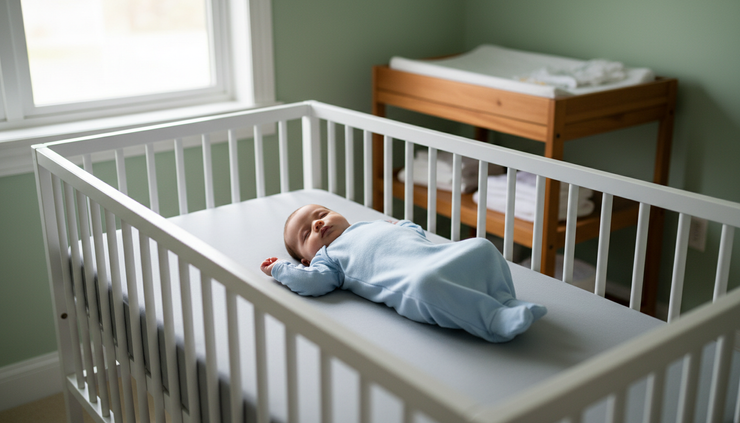
The safest sleep setup is simple: baby on their back, alone, on a firm, flat surface, with no loose items in the crib.
Safe sleep is not about perfection. It is about building consistent habits that lower risk every time a baby naps or sleeps at night.
Place babies on their backs for every sleep
The safest sleep position for infants is on the back, for naps and nighttime sleep. This applies from birth until the baby reaches 1 year old.
Side sleeping is not recommended because babies can roll onto their stomachs. Stomach sleeping carries a higher risk, especially for young babies who cannot easily reposition themselves.
Once a baby can roll from back to stomach and stomach to back on their own, most experts say caregivers do not need to keep repositioning them all night. Still, the baby should always be placed down on their back at the start of sleep.
If reflux is a concern, ask the pediatrician for guidance. For most babies, back sleeping remains the safest position, even with mild spit-up.
Set up the crib, bassinet, or play yard safely
A safe sleep space does not need to be fancy. In fact, the safest setup is often the plainest one.
Choose a crib, bassinet, or play yard that meets current safety standards. The sleep surface should be:
Firm and flat
Covered only with a tight fitted sheet
Free of pillows, quilts, comforters, loose blankets, bumpers, stuffed animals, and positioners
Not inclined, curved, cushioned, or soft
Soft surfaces can block a baby’s airway or increase the risk of overheating. Adult beds, couches, recliners, nursing pillows, and loungers are not safe sleep spaces.
Crib bumpers are also unsafe, including padded and mesh versions. They may seem protective, but they can create entrapment or suffocation hazards.
If a baby falls asleep in a car seat, swing, carrier, or stroller, move them to a firm, flat sleep surface as soon as it is safe and practical. These products are useful for travel or supervised awake time, but they are not designed for routine sleep.
Share a room, not a bed
The American Academy of Pediatrics recommends that babies sleep in the same room as their caregiver, close to the bed, ideally for at least the first 6 months. A separate crib, bassinet, or play yard gives the baby their own protected space while keeping them nearby for feeding and soothing.
Bed-sharing increases the risk of sleep-related death, especially when:
The baby is younger than 4 months
The baby was born premature or had a low birth weight
A caregiver is very tired
A caregiver has used alcohol, cannabis, opioids, sedating medication, or other substances
The sleep surface is soft, such as a couch, recliner, pillow-top mattress, or waterbed
There are blankets, pillows, or other people in the bed
Feeding in bed can happen, especially during exhausting nights. To reduce risk, remove extra pillows and blankets before feeding. If sleep feels likely, place the baby back in their own sleep space as soon as possible.

Keep the room comfortable, not overheated
Overheating is linked with higher sleep-related risk. A baby’s room should feel comfortable to a lightly clothed adult. Many families aim for about 68 to 72°F, but the exact number matters less than avoiding heavy layers and heat buildup.
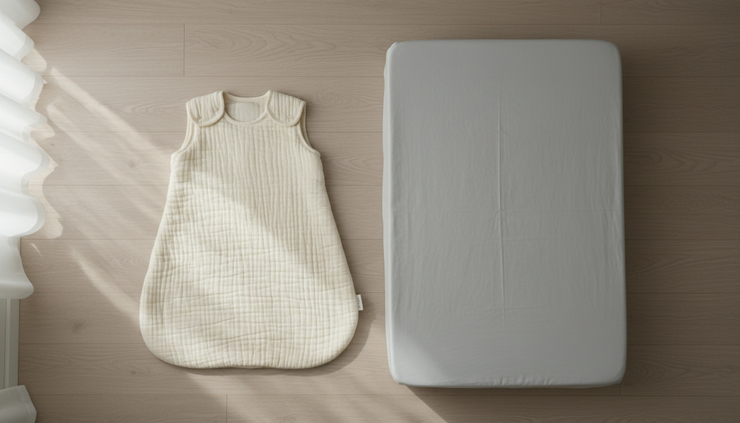
A good rule is to dress the baby in one more light layer than an adult would wear in the same room. Sleep sacks or wearable blankets are safer than loose blankets.
Signs a baby may be too warm include:
Sweating
Damp hair
Flushed skin
A hot chest or neck
Rapid breathing that does not settle
Cold hands and feet are common in babies and do not always mean the baby is too cold. Check the chest or back of the neck instead.
Use swaddles carefully and stop at the right time
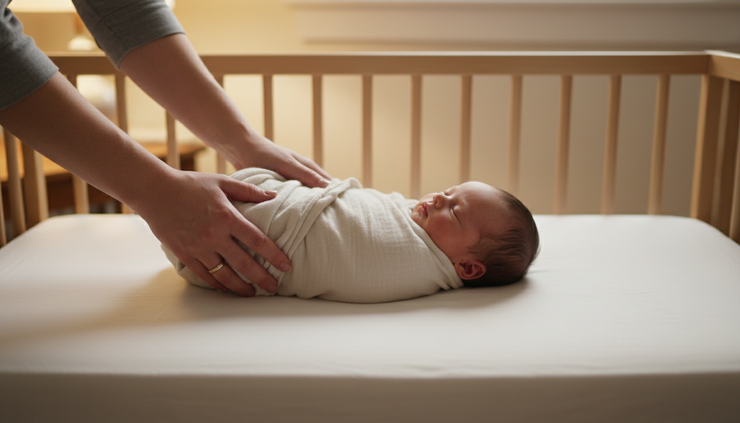
Swaddling can help some newborns settle, but it must be done safely. A swaddle should be snug around the chest but loose enough at the hips so the legs can bend and move.
Place a swaddled baby only on their back. Stop swaddling as soon as the baby shows signs of trying to roll, which can happen earlier than many parents expect.
Weighted swaddles, weighted sleep sacks, and weighted blankets are not recommended for infants. They may make movement and breathing harder.
Other choices that support safer sleep
Small habits can add another layer of protection.
Offer a pacifier at nap time and bedtime once feeding is going well. If breastfeeding, many families wait until nursing is established. If the pacifier falls out after the baby falls asleep, there is no need to put it back in.
Keep the baby’s sleep area smoke-free and vape-free. Smoke exposure during pregnancy and after birth raises the risk of SIDS.
Stay up to date with well-child visits and immunizations. Research has found that routine vaccines are associated with a lower risk of SIDS, not a higher one.
Breastfeeding, when possible, is also linked with reduced sleep-related risk. Any amount can help, and safe sleep guidance still applies whether a baby is breastfed, formula-fed, or both.
A simple safe sleep checklist for tired nights
When it is 2 a.m. and everyone is exhausted, simple rules are easiest to remember.
Before each sleep, check that:
Baby is on their back
Baby is alone in the sleep space
The mattress is firm, flat, and covered with only a fitted sheet
There are no blankets, pillows, bumpers, toys, or stuffed animals
The room feels comfortable, not hot
Baby is in a crib, bassinet, or play yard, not a couch, adult bed, swing, or lounger
Safe sleep for infants works best when every caregiver follows the same plan. Grandparents, babysitters, daycare providers, and overnight helpers should know the rules too, even if advice was different when they raised children.
The reassuring takeaway
Safe sleep does not require expensive gear or a perfect routine. It starts with a clear, repeatable setup: back sleeping, a firm flat surface, an empty crib, light clothing, and a room that is comfortable rather than warm.
Parents already make hundreds of choices every week. This is one area where simple choices can make a meaningful difference. Keep the sleep space plain, follow the same steps each time, and ask the pediatrician whenever something feels unclear. Confidence grows when the plan is simple enough to use, even on the tired nights.


Comments